

Wedding dresses made of tulle
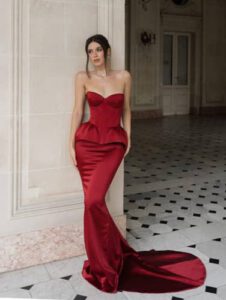
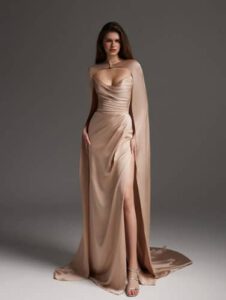
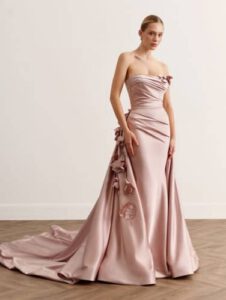
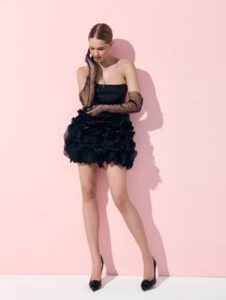
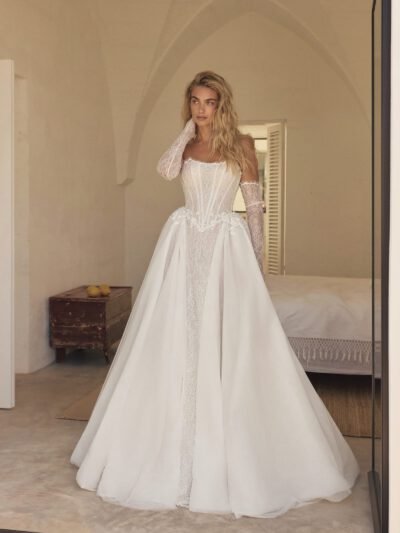
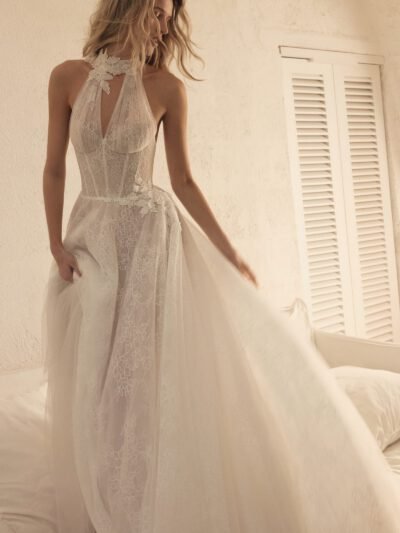
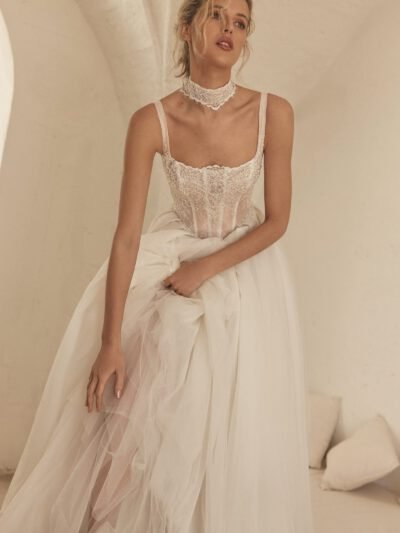
The tulle creates volume in layers: the skirt reacts to a step, and transparent planes soften the contour. When choosing a model, evaluate the number of layers, the extent of the flare and whether the fabric remains a background for the silhouette or carries embroidery, flowers or glitter in different lighting.
165 model
 To order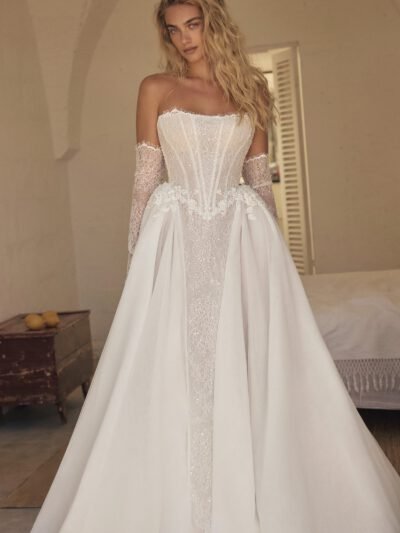
Less is More VI
Vittoria
83 700,00 грн
 To order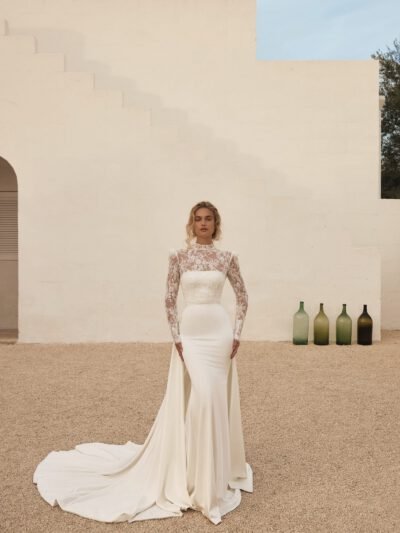
Less is More VI
Ferran
83 205,00 грн
 To order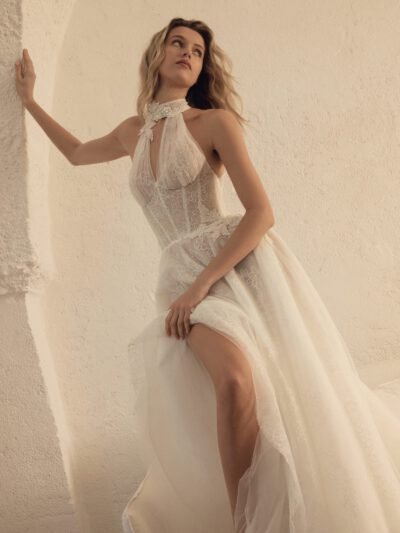
Less is More VI
Brittel
100 035,00 грн

Less is More VI
Kirel
86 670,00 грн
 To order
Less is More VI
Delta
66 375,00 грн
 To order
Less is More VI
Solene
170 325,00 грн
 To order
Less is More VI
Sanremo
88 155,00 грн
 To order
Less is More VI
Ludovica
95 580,00 грн
 To order
Less is More VI
Luca
77 265,00 грн
 To order
Less is More VI
Helios
96 570,00 грн
 To order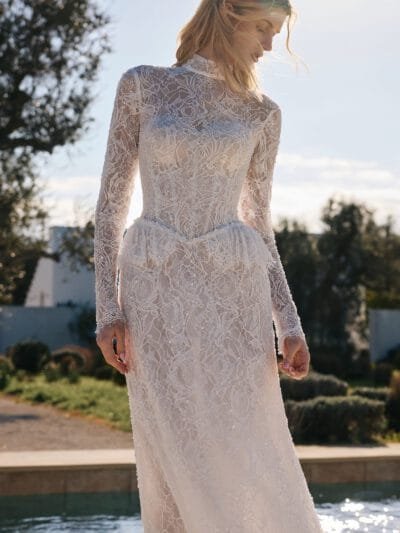
Less is More VI
Chester
91 125,00 грн
 To order
Less is More VI
Broadway
82 710,00 грн
 To order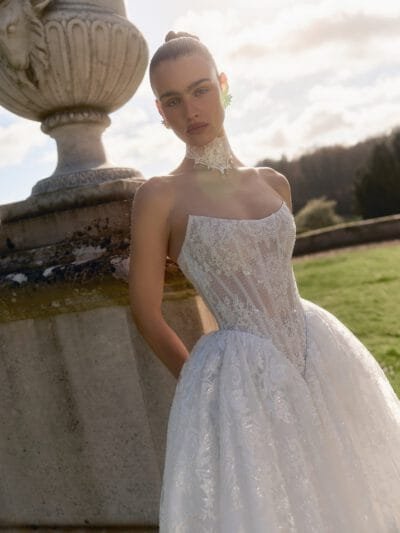
Maison Blanche
Melle
112 905,00 грн
 To order
Maison Blanche
Amarant
137 655,00 грн
 To order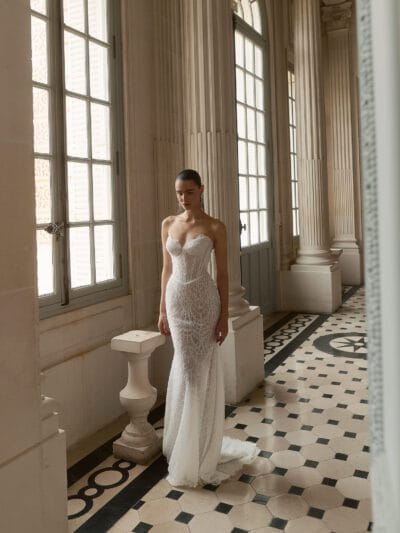
Maison Blanche
Nymphea
126 765,00 грн
 To order
Maison Blanche
Nico
79 740,00 грн
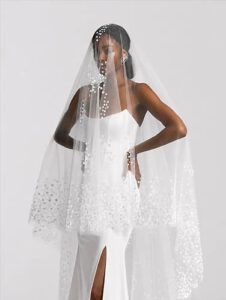
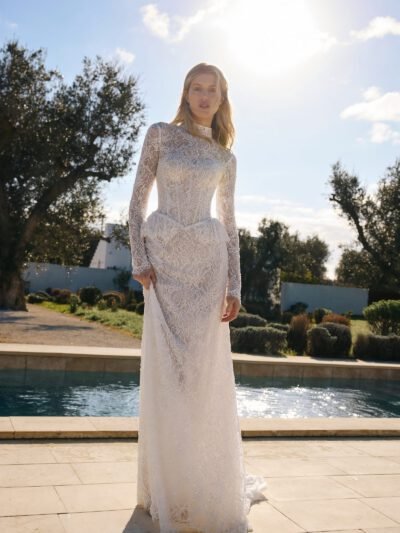
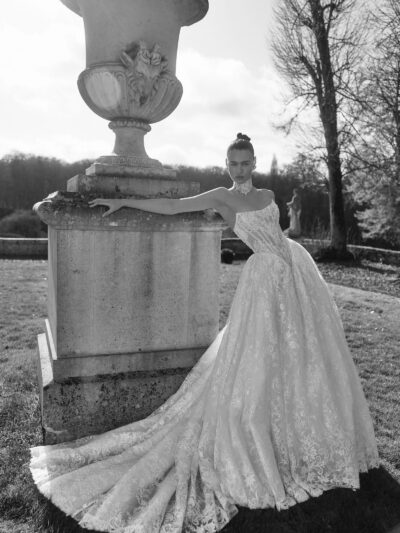
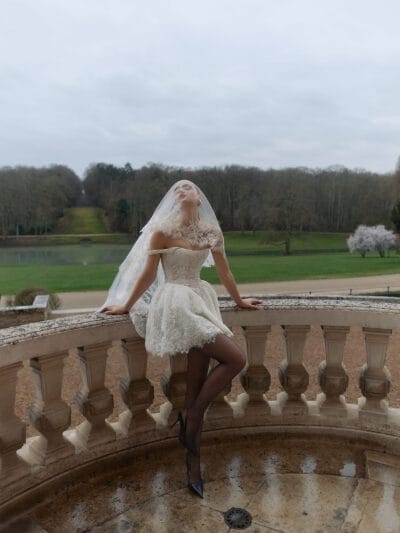
The volume of the tulle is not born from one dense plane, but from the layers between which light passes. During the step, they move with different amplitudes, so the skirt does not look stationary even in a simple cut. The general contour can be read in full height, and the close-up photo shows the transparency of the overlays, the edge of the mesh and the decor on its surface.
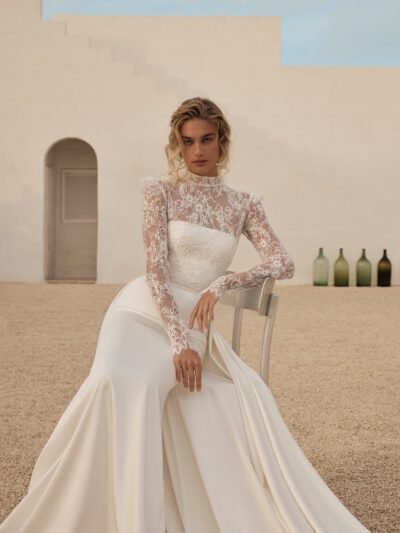
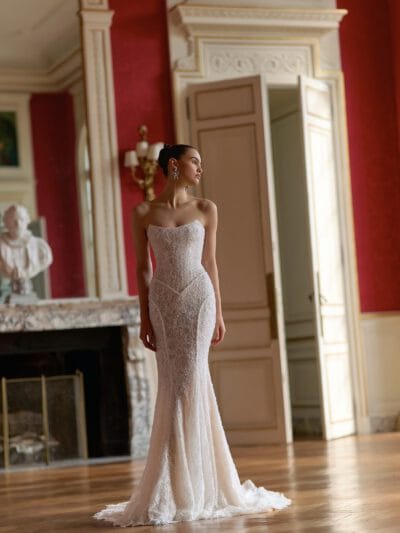
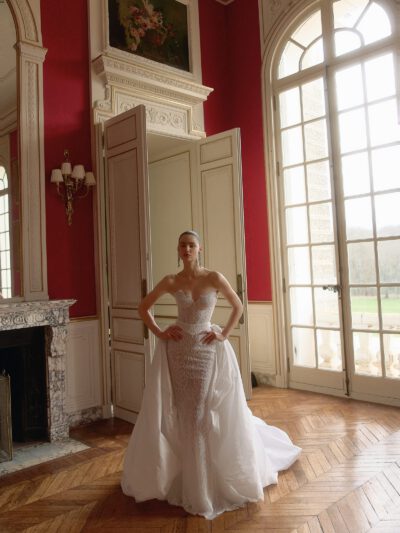
Unlike mikado, which outlines the form with a dense smooth plane, the tulle builds it by repeating thinner layers. IN A-silhouettes the layers repeat and soften the smooth expansion of the skirt, u ball gown give space for a larger volume. In a mermaid or sheath, the fabric works more locally: for example, appearing below the flare line or as a top sheer layer. It is the location of the tulle, and not its name, that determines the character of the form.
The tulle can remain a pure background or carry a floral motif, beads and embroidery. On a transparent base, the spaces between the elements become part of the pattern, and the decor seems to be separated from the lower layer. If the trim is heavy on the bodice and tapers down, see if the transition looks intentional. For a model with an expressive silhouette of a mermaid separately appreciate how the decor meets the beginning of the flare.
When choosing, do not limit yourself to a fixed perspective in front of the mirror. Walk around, come back, take a short video and look at the skirt against the light and against a darker background. So you can see the number of layers, the movement of the hem, and how clearly the silhouette is read under the transparent planes. Also compare the width and transparency of the hem. At a fitting in Lviv, compare models with different volumes of tulle in the same movement — this will more accurately show the difference between airy softness and expressive shape.