



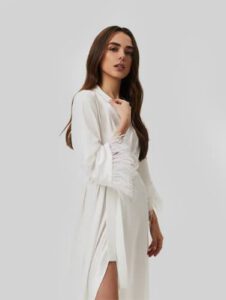




Wedding and evening dresses with a V-back
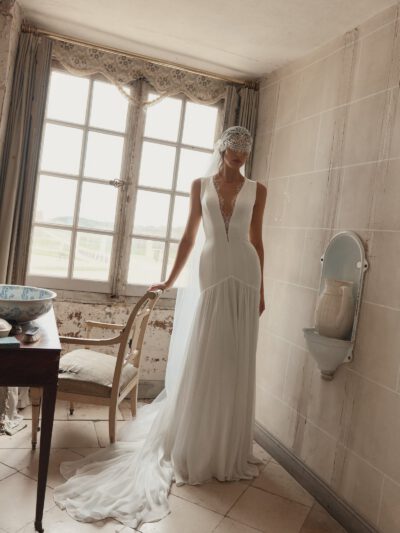
A V-shaped back is formed by two edges converging to a central lower point. Its shape does not automatically determine depth or openness. Check the axis and symmetry of the corners, the joints at the shoulders and sides, the fastening and decoration, and after moving, take a photo straight from the back and at an angle.
172 model
 To order
Atelier Heritage Edition
Larson
115 135,00 ₴
 To order
Less is More VI
Encanto
114 390,00 ₴
 To order
Less is More VI
Alis
102 015,00 ₴
 To order
Less is More VI
Marton
53 505,00 ₴
 To order
Maison Blanche
Lunaria
120 825,00 ₴
 To order
Maison Blanche
Lior
82 710,00 ₴
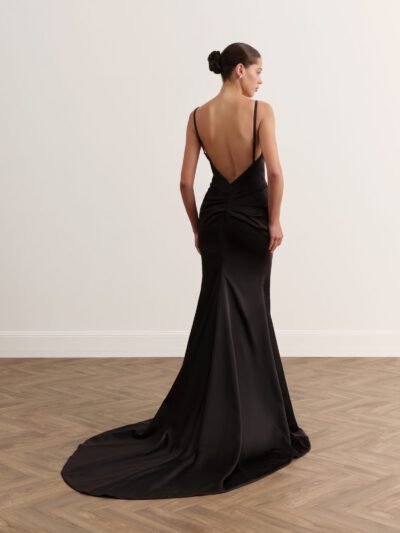
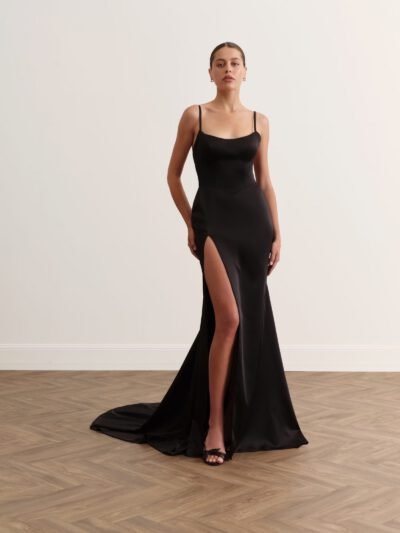
Wona Evening 2026
26101
58 950,00 ₴
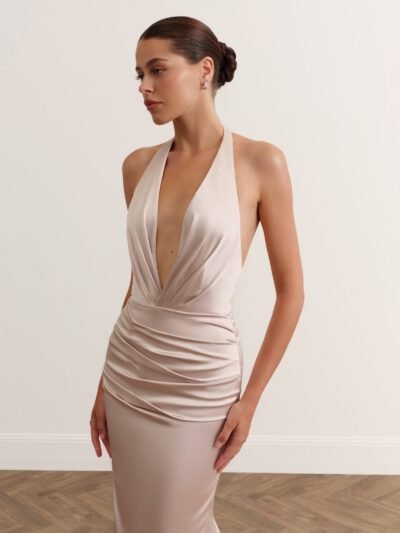
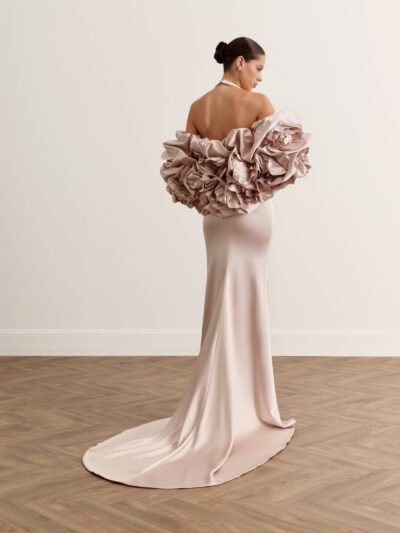
Wona Evening 2026
26104
114 390,00 ₴
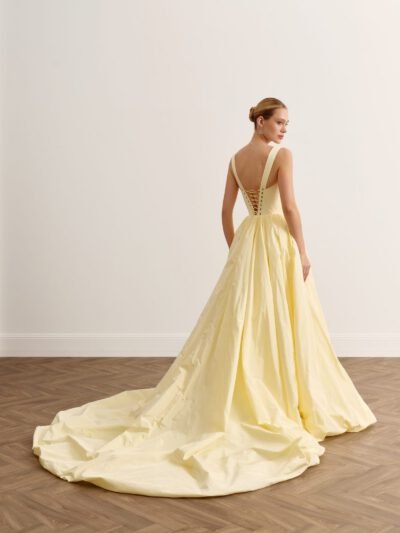 To order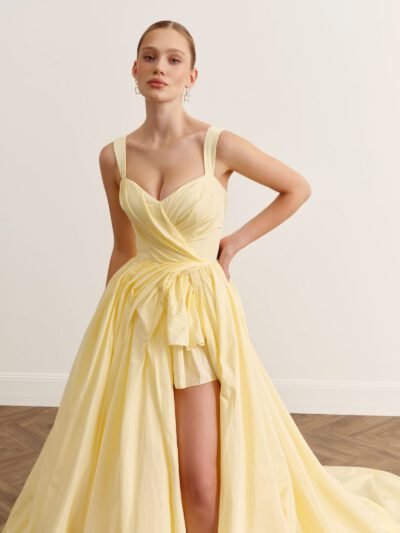
Wona Evening 2026
26103
85 680,00 ₴
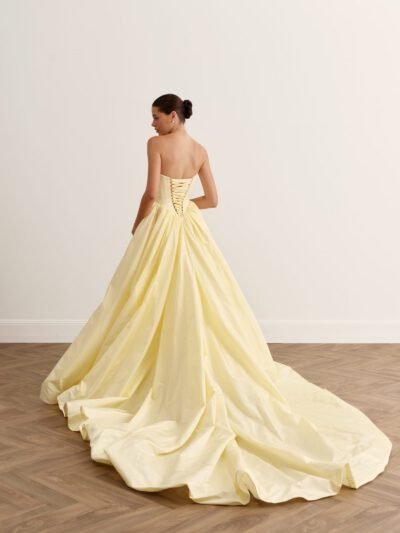
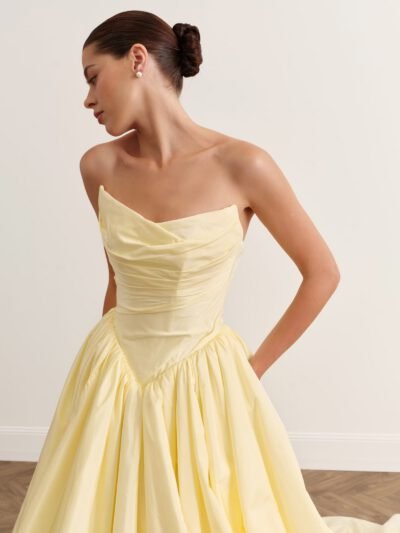
Wona Evening 2026
26105
93 105,00 ₴
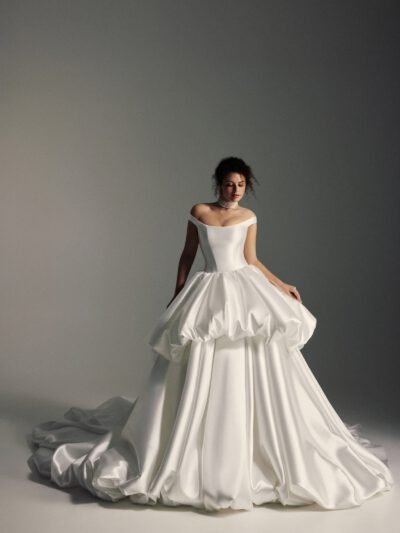 To order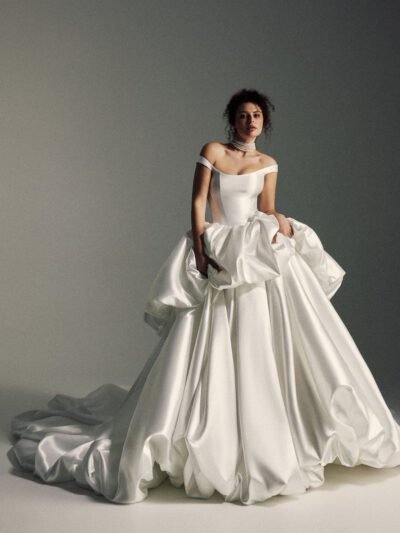
Blooming Love
Blossom
108 945,00 ₴
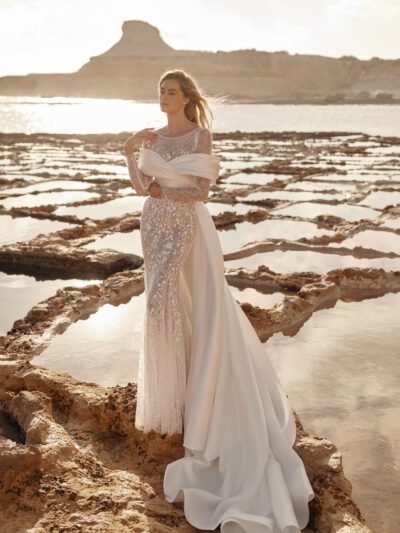 To order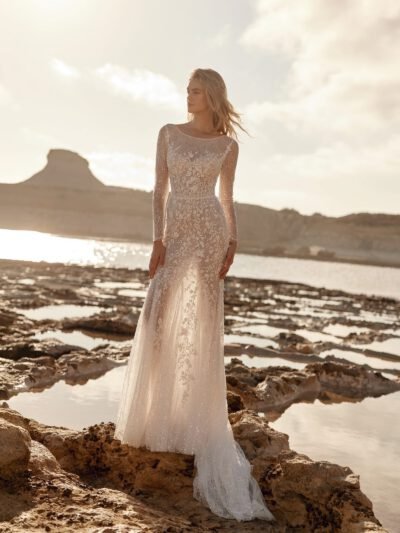
Sirenity
Werra
139 140,00 ₴
 To order
La Femme Edition
Minnie
103 995,00 ₴
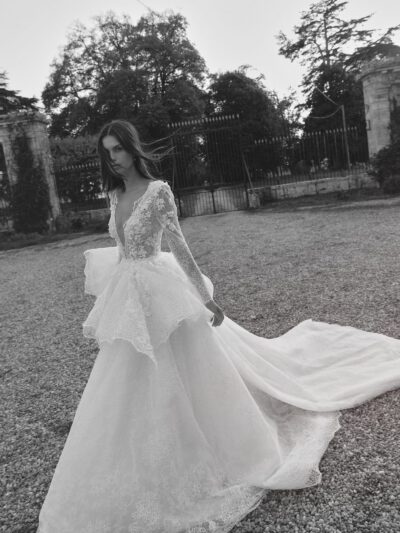 To order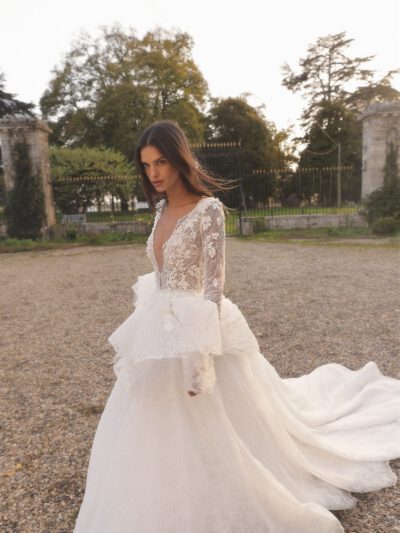
La Femme Edition
Grandis
246 555,00 ₴
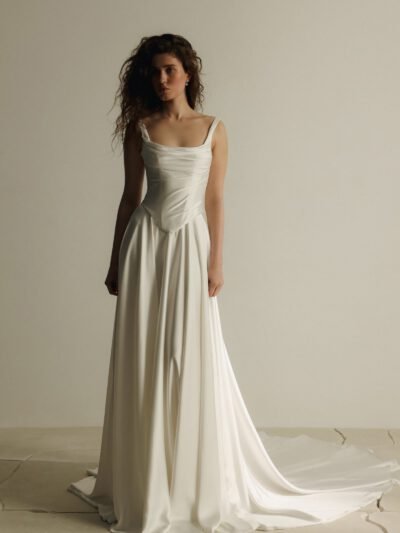 To order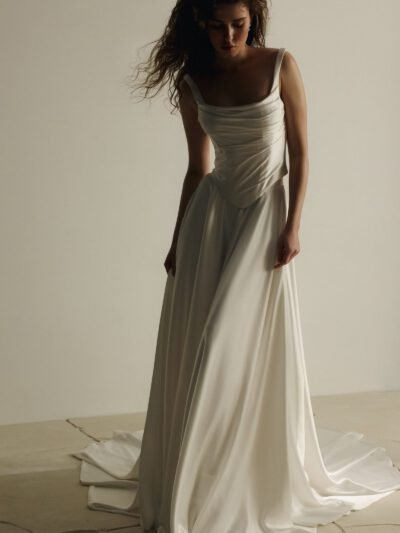
Kiss of Silence
Artie
65 385,00 ₴
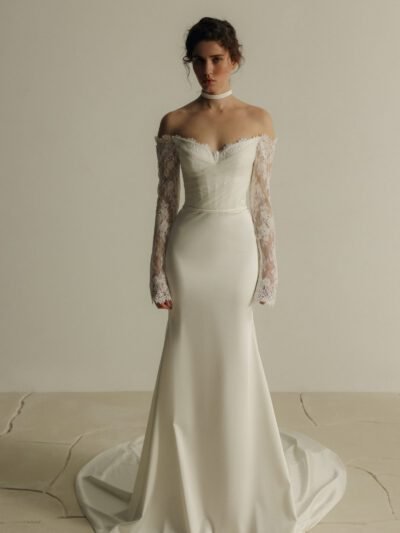
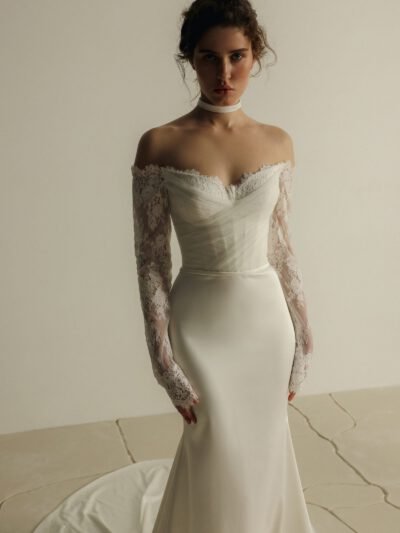
Kiss of Silence
Leif
69 345,00 ₴
The two lines should meet not just low, but on a common central axis. It is this direction that forms a V-shaped back: the edges go from the shoulders or upper side points and converge downward. The angle can be wide or narrow, and the bottom point can be at different heights, so shape, depth and openness must be read separately.
U-shaped back passes into the lower part in a smooth arc, while V has a more pronounced convergence of the two sides. Low Back describes the height of the lower point, and open — the area of a visually unclosed area. The V-contour can be combined with both features, but neither of them follows from the name of the shape alone.
Stand straight and ask them to look from each shoulder to the center. Compare the right and left corners, the entrances to the side seams and the position of the bottom point relative to the fastener. If the edge is decorated embroidery, see if the pattern fits equally to the top and does not hide the difference of the sides. Check the underwear in a specific dress from behind and at an angle; the V-shape alone does not guarantee compatibility.
Raise your arms, sit down, turn your body and stand up again. After that, see if the central point remains on the axis, how the edges lie near the shoulders and if the decor has not shifted. Make one straight and two diagonal shots. At a fitting in CRYSTAL, compare them before and after movement - this way you can see the actual geometry without the promises of visual lengthening, support or fit of certain underwear.