




Chantilly lace wedding dresses
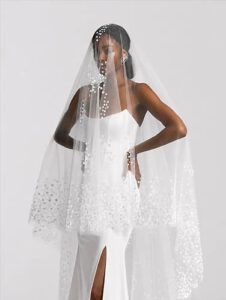
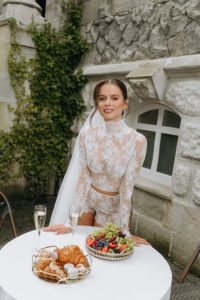
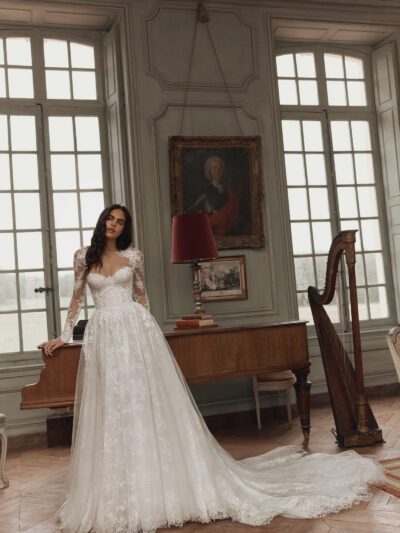
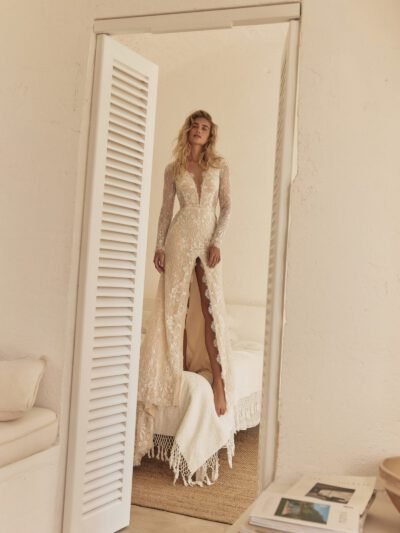
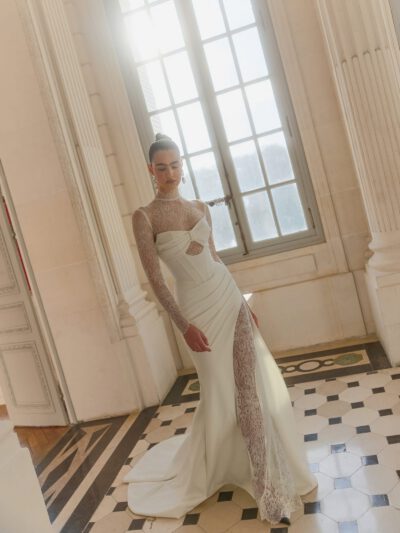
The fine openwork Chantilly base creates a delicate pattern, especially noticeable on the exposed areas of the bodice, back and sleeves. Assess it up close and in portrait: the contrast with the skin, the thickness of the motif and whether the lace edge gently finishes the neckline are all important.
75 model
 To order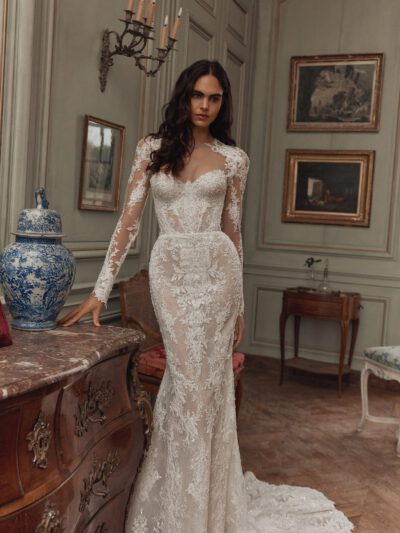
Atelier Heritage Edition
Renoar
311 155,00 грн
 To order
Atelier Heritage Edition
Larson
115 135,00 грн
 To order
Atelier Heritage Edition
Beamount
291 105,00 грн
 To order
Atelier Heritage Edition
Soho
138 895,00 грн
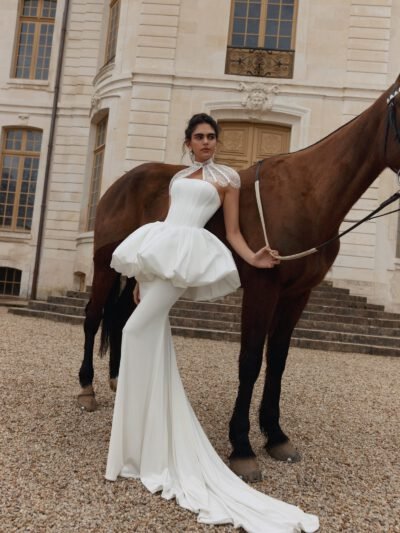 To order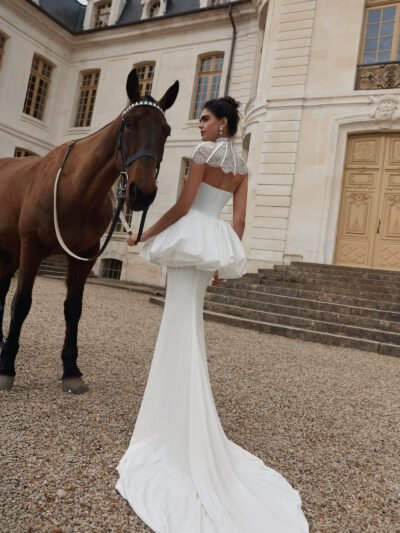
Atelier Heritage Edition
Million
186 415,00 грн
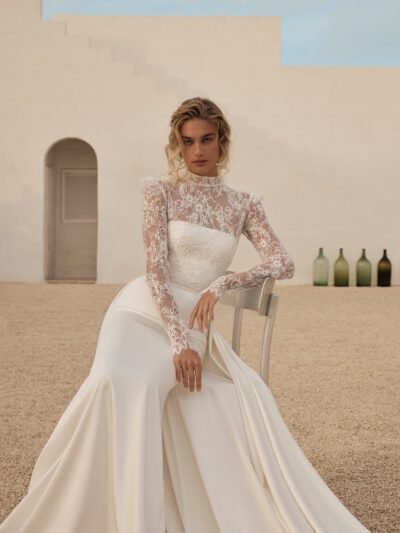 To order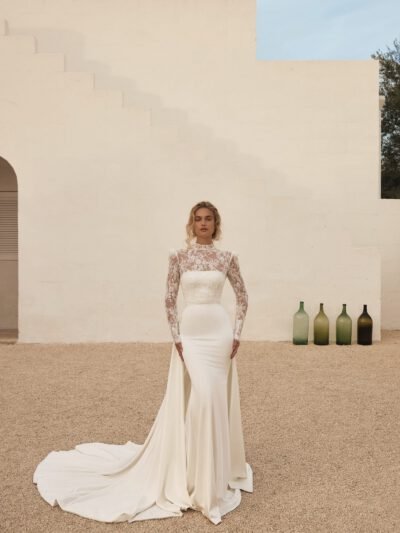
Less is More VI
Ferran
83 205,00 грн
 To order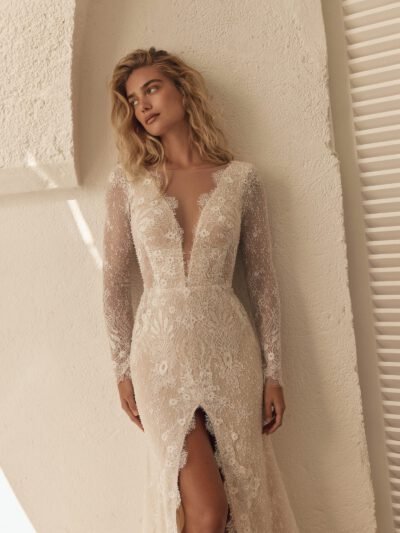
Less is More VI
Meira
90 135,00 грн

Maison Blanche
Code
149 535,00 грн
 To order
Maison Blanche
Orlando
103 500,00 грн
 To order
Maison Blanche
Comet
93 105,00 грн
 To order
Maison Blanche
Charleen
101 520,00 грн
 To order
Maison Blanche
Lunaria
120 825,00 грн

Maison Blanche
Livia
121 320,00 грн
 To order
Maison Blanche
Noel
114 390,00 грн
 To order
Maison Blanche
Margaret
108 450,00 грн
 To order
Maison Blanche
Herrera
81 225,00 грн
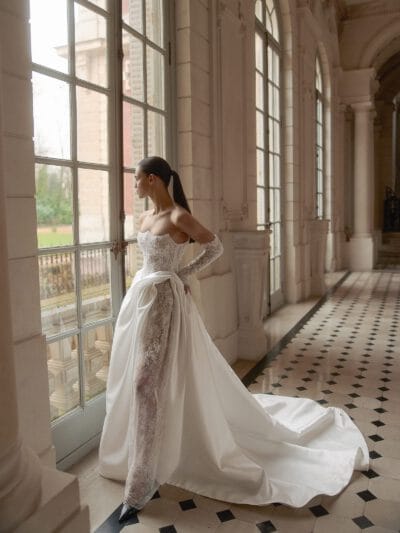
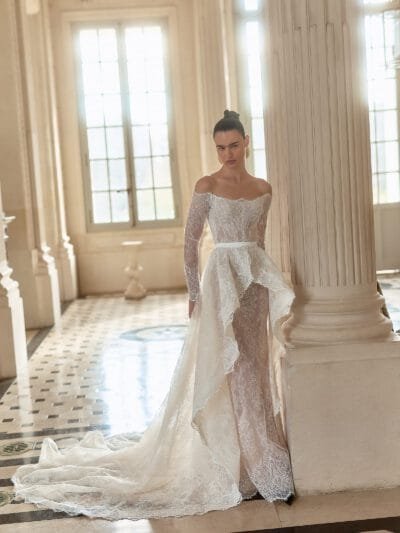
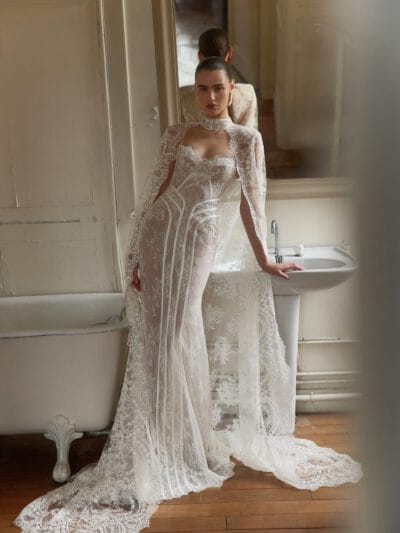
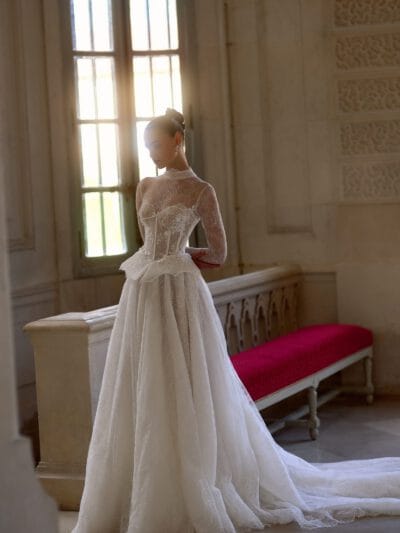
Chantilly is best seen where the thin openwork base meets the leather: the gaps become part of the composition, and the delicate pattern takes on a contrast. Above the lining, the same lace is read in a more solid texture. Therefore, in one dress, it is worth considering the bodice, sleeves and back separately - the motif may sound different depending on the base underneath.
Lace as a broad category covers different scales, reliefs and ways of arranging the drawing. Chantilly has a more specific visual character: a thin mesh base and a delicate openwork motif. However, this appearance alone does not say anything about the manufacturing method, geography or composition of a particular model. It is more practical to trace how dense the pattern is, where it is interrupted and whether it remains visible in full height.
Delicacy should be read not only from close up
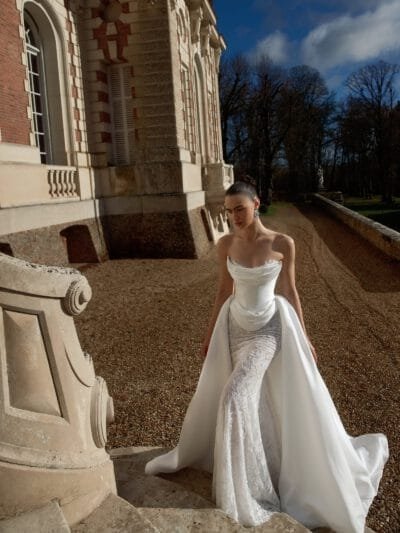
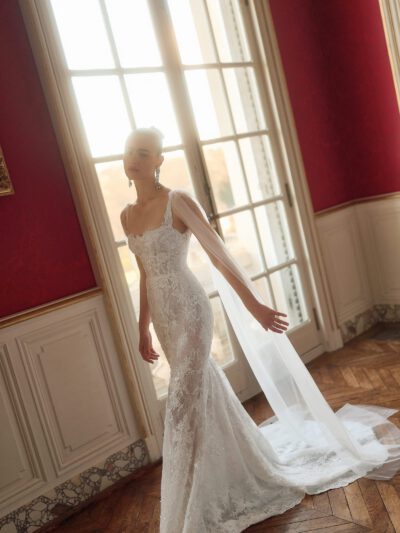
In a dress silhouette case or in the “mermaid” model, chantilly repeats a long adjacent line; in an A-silhouette and a ball gown, it gets a wider plane on the skirt. In the upper part, it is often adjacent to the heart-shaped chi illusion cutout. On long sleeves and open back the contrast with the skin makes the edge and placement of the subject particularly important for portraits and back shots.
Beads and embroidery can add individual points of light on top of the pattern, but first appreciate the openwork structure. Look at it near a window, under a directional lamp, and in a phone photo: too small a motif can be lost from a distance, although it will remain expressive up close. At a fitting in CRYSTAL, compare chantilly on lined and open areas and take a portrait without filters - this way it will become clear whether its delicacy suits you in real scale and lighting.