
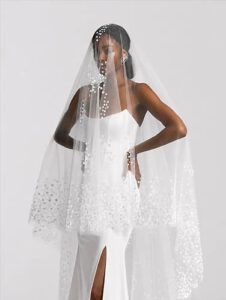






Wedding and evening dresses with a basque waist
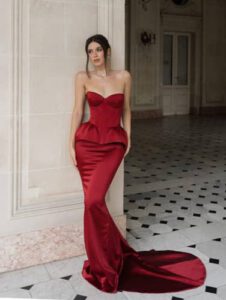
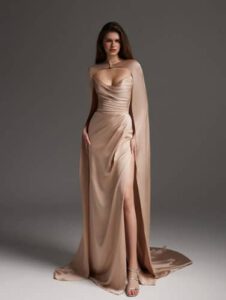
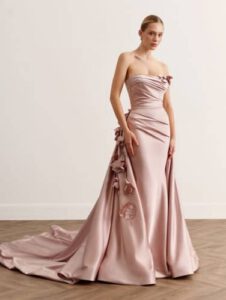
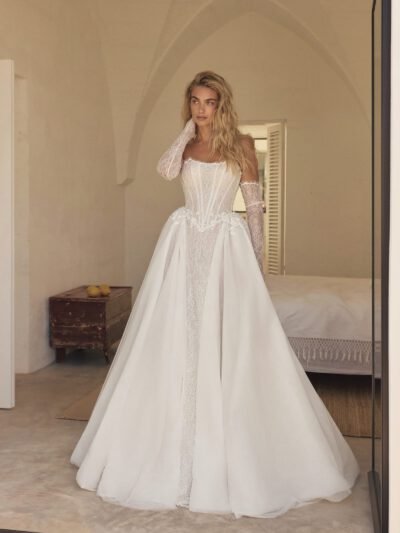
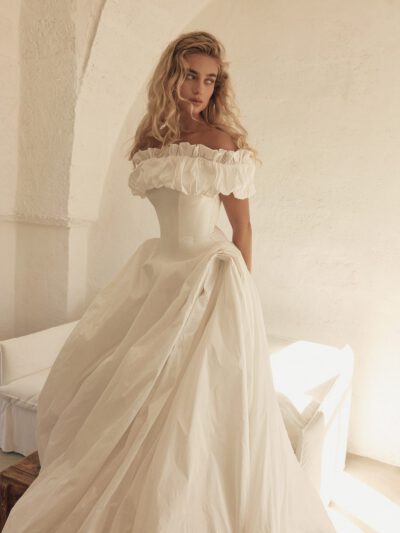
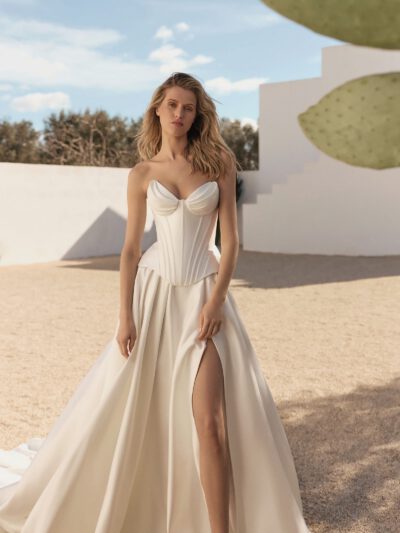
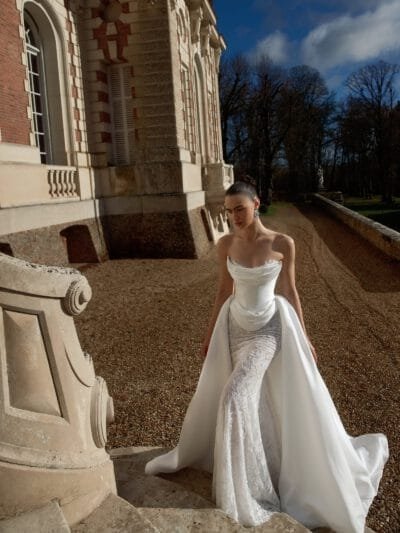
In a basque waist, the border of the bodice and skirt descends to the center in a V- or U-shape or a smooth arc. Evaluate the shape and depth of the drop, the symmetry of the side points, the seams and the face pattern, then sit back: this design does not guarantee a lengthening of the hull or a slimmer appearance.
177 model
 To order
Atelier Heritage Edition
Eterno
184 930,00 ₴
 To order
Atelier Heritage Edition
Carat
205 720,00 ₴
 To order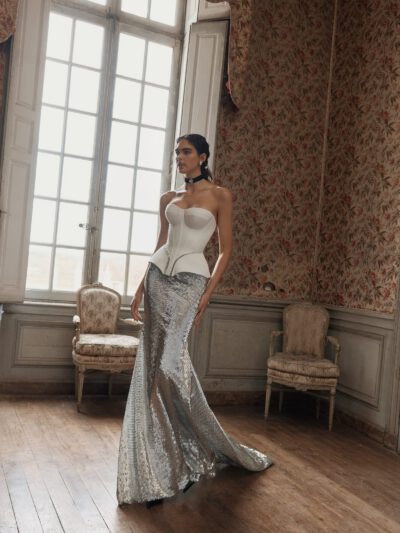
Atelier Heritage Edition
Spectrum
155 230,00 ₴
 To order
Atelier Heritage Edition
Prime
193 095,00 ₴
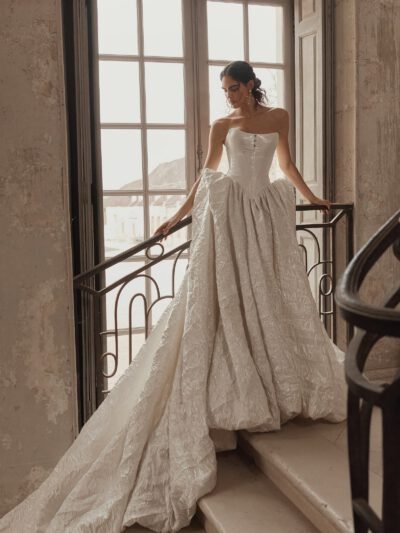 To order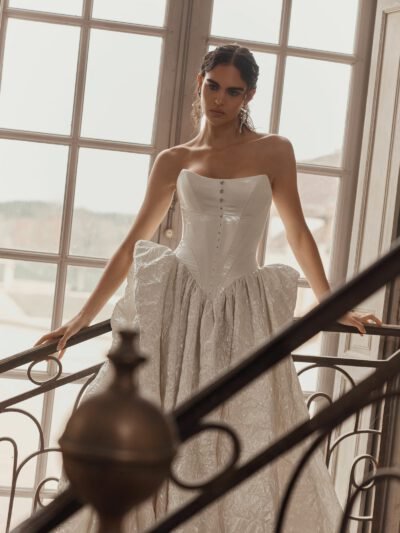
Atelier Heritage Edition
Luxembourg
167 850,00 ₴
 To order
Less is More VI
Encanto
114 390,00 ₴
 To order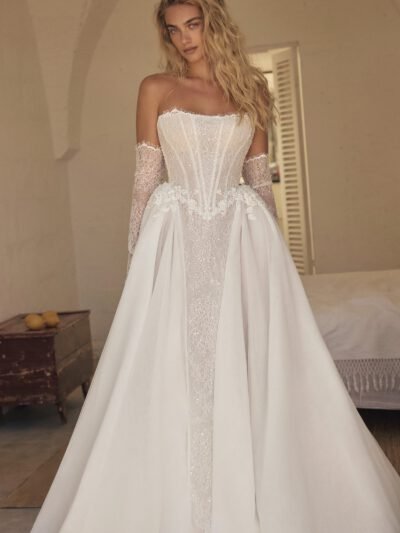
Less is More VI
Vittoria
83 700,00 ₴
 To order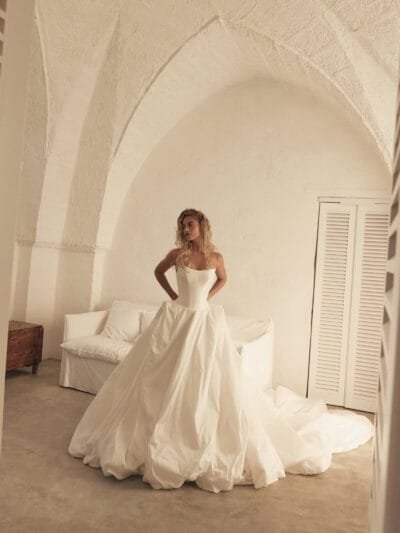
Less is More VI
Alis
102 015,00 ₴

Less is More VI
Enzo
76 770,00 ₴

Less is More VI
Kirel
86 670,00 ₴
 To order
Less is More VI
Luca
77 265,00 ₴
 To order
Less is More VI
Femin
65 880,00 ₴
 To order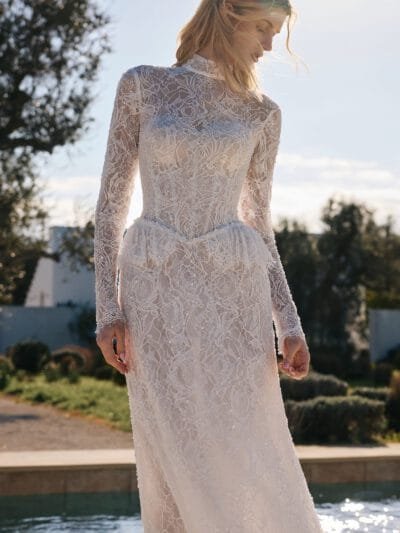
Less is More VI
Chester
91 125,00 ₴
 To order
Maison Blanche
Code
149 535,00 ₴
 To order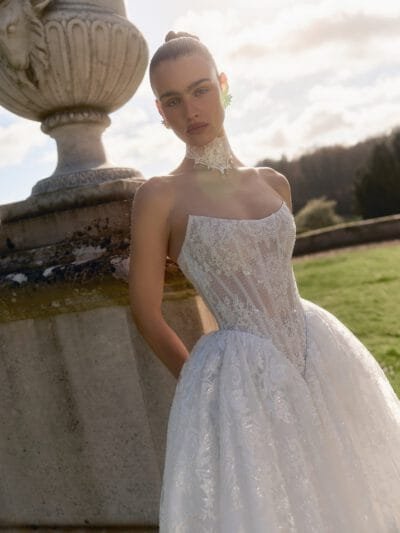
Maison Blanche
Melle
112 905,00 ₴
 To order
Maison Blanche
Norma
103 005,00 ₴
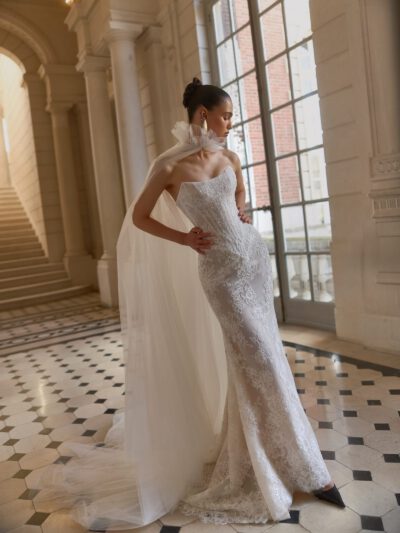
The center of the basque waist is located below its side points: the edge of the bodice descends in a V-shaped angle, a softer U-shape or arc and passes into the skirt. It is the trajectory of the structural seam that determines this line. It does not mean the presence of a decorative peplum - an additional detail or frill - and does not guarantee an elongated body or a slimmer appearance.
Natural waist usually reads closer to the horizontal, while Basque has a distinct central descent. Low waist passes below the natural level along the wider part of the body; it is not the same as one lower point in the center. When comparing models, find both side points, the central peak, and measure the difference between them by sight, not just by name.
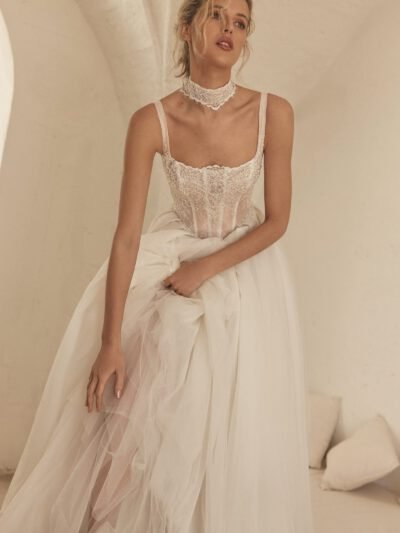
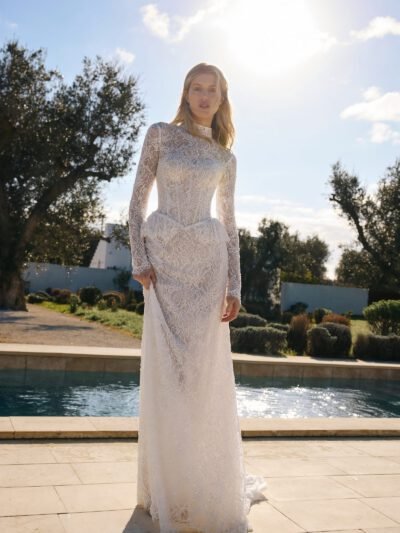
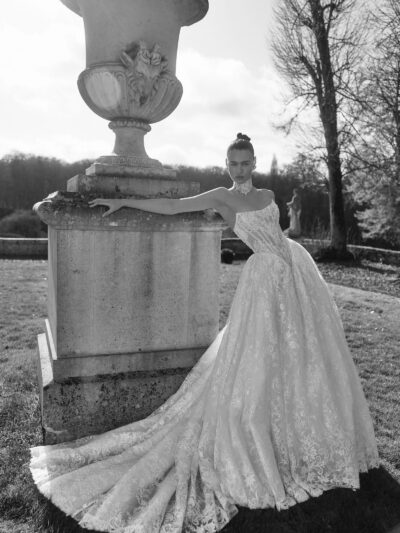
In the front, check whether the right and left sides converge on the same axis relative to the bodice and skirt. On lace trace how the pattern goes through a corner or an arc; embroidery can also emphasize or partially hide the structural seam. IN ball gown separately, see where the volume of the skirt begins after the central descent to appreciate the line as a single composition.
Sit without adjusting the bodice and see where the bottom point is, whether the V- or U-contour remains, and how the fabric gathers at the seam. Then stand up straight and take a second face-on photo. On the fitting in CRYSTAL, compare both frames: this way you can see not the abstract effect, but the actual depth, symmetry and behavior of the seam.